How Softweb reduced design preparation time by 45% for a leading semiconductor solutions provider with ComponentIQ
Our client is a semiconductor engineering company supporting electronic product development across multiple industries. They partnered with Softweb to implement ComponentIQ, our reference design and component intelligence platform for engineering design and component management. The implementation accelerated design preparation, simplified component evaluation, improved engineering reuse, and standardized documentation workflows.
 Industry: Semiconductor
  Business type: Enterprise
 - Platform: ComponentIQ
- Technology: Reference architecture management, Component lifecycle intelligence, Engineering workflow automation


Client profile
Our client is a semiconductor engineering company that designs and delivers reference architectures, evaluation platforms, and application-specific solutions for automotive, industrial, and smart energy markets. Through a network of 10+ engineering and innovation centers worldwide, the company supports OEMs, product manufacturers, and engineering organizations across multiple industries.
The organization collaborates with semiconductor manufacturers, technology partners, and product engineering teams to accelerate the development of embedded and connected products. Their portfolio spans reference designs, development platforms, and system-level solutions built around a broad range of semiconductor technologies.
Technical challenges
Our client relied on engineering assets, component information, and validation processes distributed across multiple tools, repositories, and teams. As development programs expanded across product lines and engineering groups, maintaining consistency, visibility, and control across engineering workflows became increasingly difficult.

Limited design reuse
Engineering knowledge was difficult to reuse across projects and teams. Validated reference designs, previous engineering decisions, and component knowledge remained scattered across documents, repositories, and individual teams.

Component selection complexity
Engineers spent considerable time comparing component specifications, availability, compatibility, and supplier options before making design decisions. Evaluations relied on information spread across multiple sources and systems.

Manual design validation
Design teams relied on manual reviews to identify compatibility issues, missing connections, and configuration inconsistencies. These checks were repeated at multiple stages throughout the development lifecycle.

Component lifecycle risks
Changes in component availability, lifecycle status, and supplier inventories were not always visible during early design stages. Potential risks frequently emerged after component decisions had already been incorporated into active designs.
Manual documentation burden
Generating bills of materials, design packages, and stakeholder-ready documentation required substantial manual effort. Differences in documentation formats and processes also created inconsistencies across projects and engineering teams.
Fragmented collaboration
Engineering teams worked across multiple tools and communication channels throughout the design process. Maintaining visibility into design changes, component decisions, and project information became difficult as development expanded.
Our solution
We implemented ComponentIQ as a centralized engineering platform for battery management system development. The platform configuration was aligned with the client’s engineering workflows, approved component libraries, and design standards.
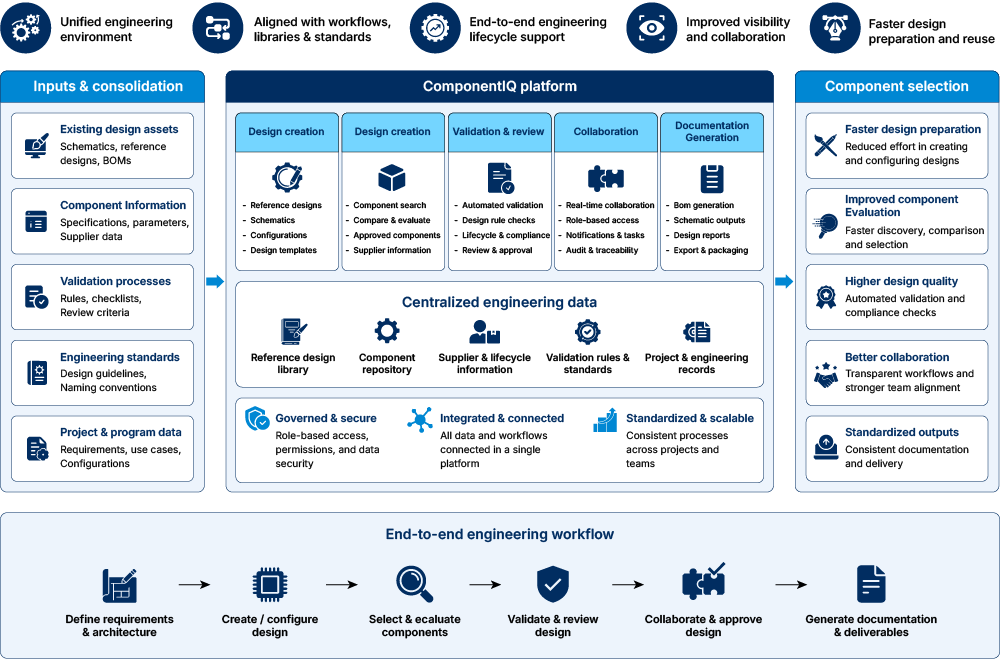
Existing design assets, component information, and validation processes were consolidated into a shared engineering environment. From there, workflows covering design creation, component selection, validation reviews, collaboration, and documentation generation were configured within the shared environment.
Centralizing reusable battery management system architectures
We created a structured library of reference designs using existing engineering assets and validated system architectures. The library organized battery management system designs according to application requirements, subsystem functions, and engineering standards.
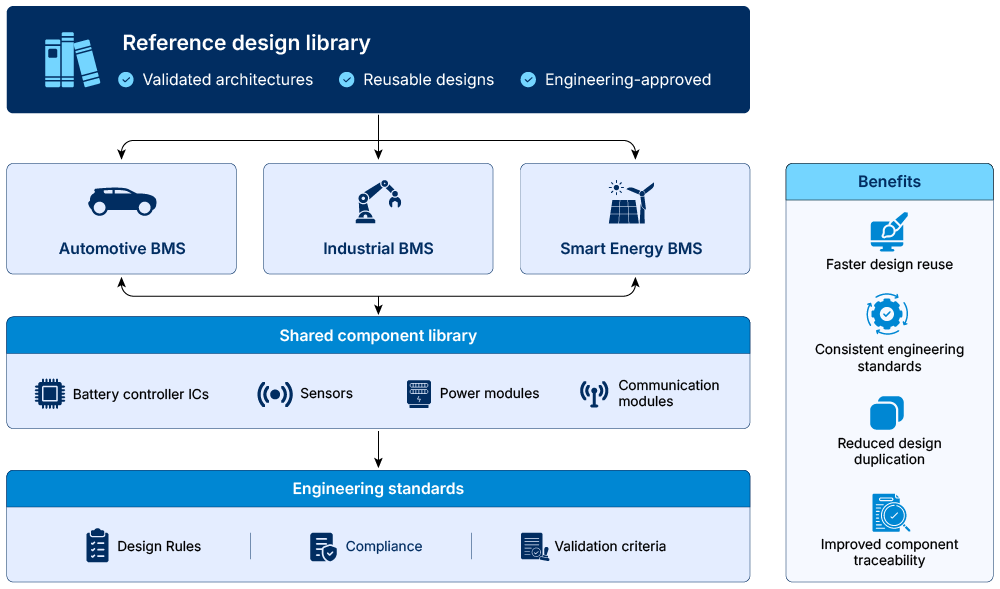
A design framework connected architecture relationships, component mappings, and design dependencies within the library. The hierarchy defined relationships between reference designs, components, and engineering standards through structured design associations.
Standardizing component discovery and configuration
We configured ComponentIQ around the client’s approved component ecosystem and supplier relationships. A centralized repository consolidated technical specifications, configuration parameters, supplier information, and component data.
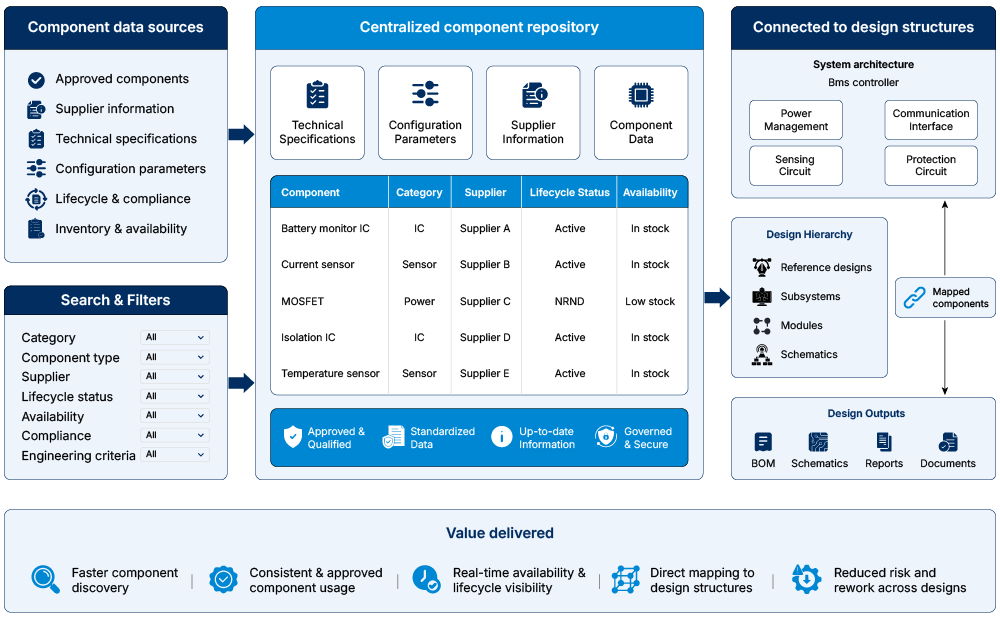
Predefined categories, filters, and engineering criteria organized component information within the repository. The platform then connected approved components, configuration attributes, and supplier data directly to the corresponding design structures.
Establishing automated engineering review processes
We established automated review coverage across component lifecycle status, design consistency, and connection integrity throughout the design process. Validation rules reflected the client’s engineering standards and review requirements.
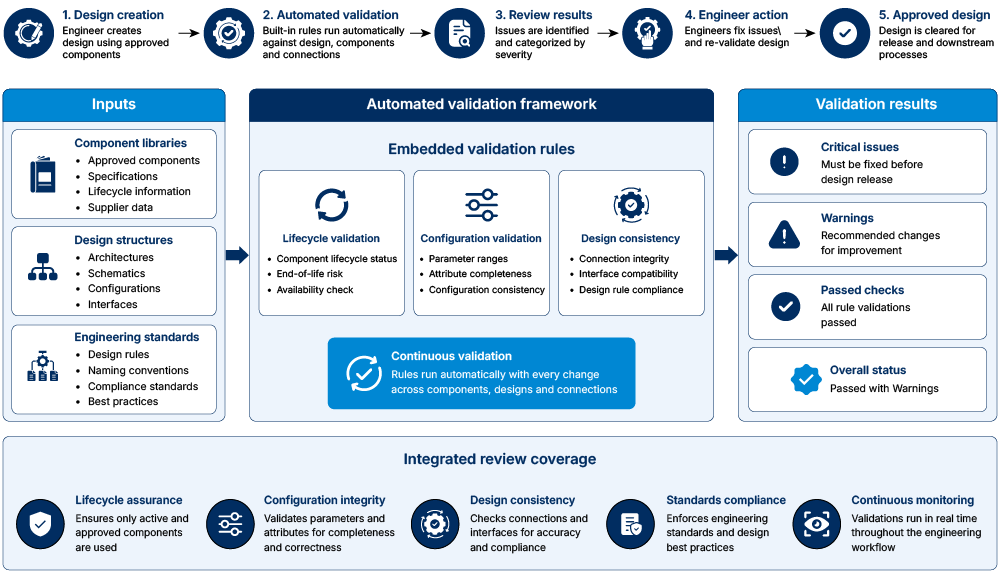
The validation framework applied those rules across component libraries and design structures during development. Integrated review criteria checked lifecycle status, configuration integrity, and design consistency throughout the engineering workflow.
Creating a shared environment for development teams
We configured ComponentIQ as a centralized engineering workspace to support collaboration across distributed teams. The workspace defined user roles, permissions, and access controls according to organizational responsibilities and project requirements.
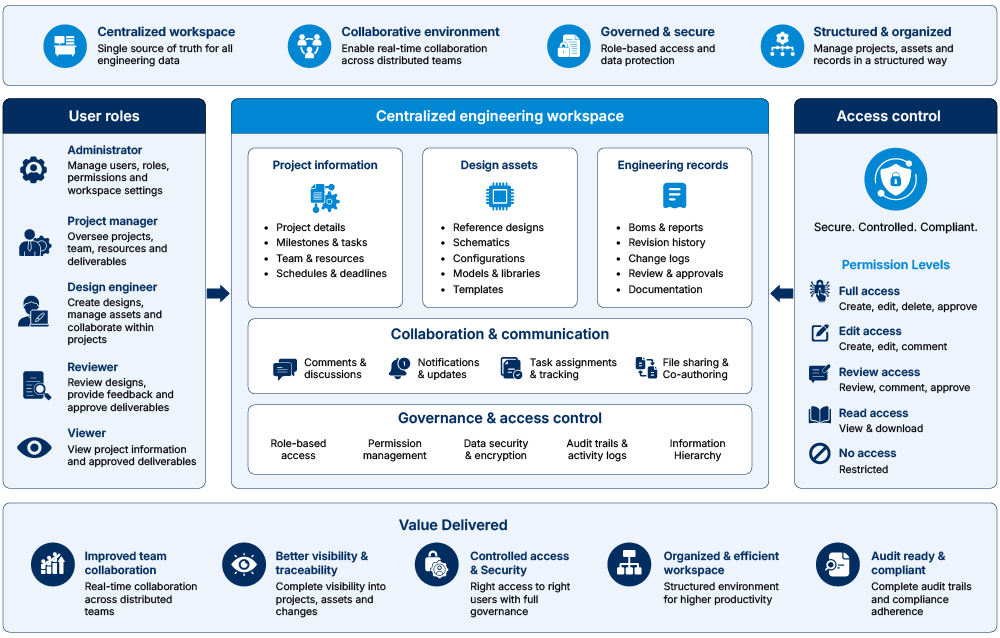
A structured project environment organized project information, design assets, and engineering records within a shared workspace. The workspace then governed user access, role assignments, and information hierarchies according to organizational requirements.
Standardizing engineering outputs and documentation
We configured ComponentIQ to generate bills of materials, schematic outputs, and design documentation from a common data structure. Documentation templates and output formats aligned with engineering and stakeholder requirements.
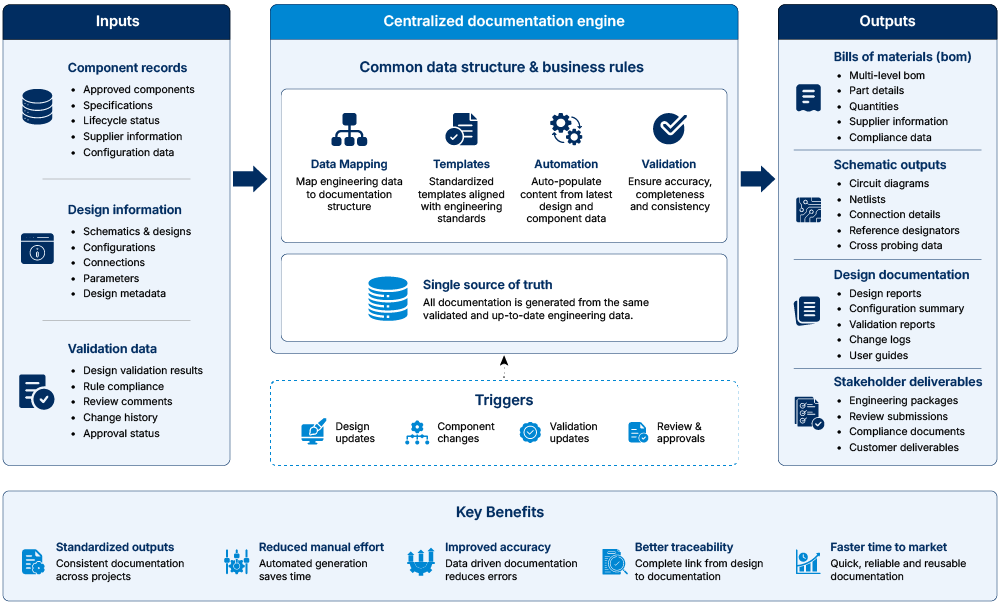
The platform linked documentation generation directly to design activities and component updates. The documentation framework defined how component records, validation data, and design information populated standardized engineering outputs.
Business goals and measurable outcomes
| Business goals | Business benefit delivered |
|---|---|
| Reduce design preparation time | 45% reduction in design preparation time reduced effort spent recreating foundational designs |
| Improve component evaluation | 50% reduction in component evaluation time through a consolidated review workflow |
| Standardize design documentation | 35% reduction in documentation effort through integrated documentation workflows |
| Improve engineering visibility | 100% visibility into engineering information strengthened collaboration and traceability |
| Improve collaboration across teams | Improved access to project, design, and component information strengthened cross-team coordination |
| Increase engineering reuse | Reusable design assets reduced duplication across future development initiatives |
| Strengthen lifecycle visibility | Component lifecycle risks were identified earlier through integrated evaluation and review workflows |
Tech stack
- Technologies / Platforms / Frameworks
- ComponentIQ, Reference design libraries, Part finder, Product configurator, Validation workflows
- Engineering Design
- Reference Design Library, Engineering Workspace
- Component Intelligence
- Component Lifecycle Management, Part Finder, Component Repository
- Product Configuration
- Product Configurator, Configuration Management
- Workflow Automation
- Engineering Workflow Automation, Validation Workflows
- Design Validation
- Automated Design Validation, Rule-based Validation Engine
- Documentation
- BOM Generation, Design Documentation Automation, Schematic Output Generation
- Collaboration
- Role-based Access Control (RBAC), Shared Engineering Workspace
- Data Management
- Centralized Engineering Repository, Design Asset Management, Component Data Management
- Engineering Standards
- Reference Architecture Management, Design Dependency Mapping, Engineering Standards Framework
Similar case studies
How Softweb Solutions eliminated days of manual invoice work for a global manufacturer

Connect Now
Our experts would be eager to hear you.

