How Softweb reduced engineering research time by 65% with an AI-powered engineering intelligence platform on Databricks
Our client supports product engineering across industrial and embedded systems with a broad portfolio of electronic components and engineering technologies. As engineering knowledge expanded across technical documents, supplier information, and engineering repositories, they partnered with Softweb to build a Databricks-based engineering intelligence platform. The implementation accelerated engineering research, improved component evaluation, and enabled faster design and procurement decisions.
 Industry: Electronics
  Business type: Enterprise
  Service: Engineering intelligence platform development
  Technology: Databricks Data Intelligence Platform, Generative AI
Client profile
Our client develops electronic components and engineering solutions for product development teams across industrial and embedded systems markets. Its portfolio spans embedded electronics, power management technologies, mixed-signal devices, and connectivity solutions, with product families backed by extensive engineering documentation across multiple development cycles.
Over time, the organization established an engineering knowledge base spanning component libraries, technical documents, supplier information, and design references from multiple product generations. They serve OEMs, contract manufacturers, and embedded systems teams across industrial, automotive, and communications markets through a portfolio of thousands of electronic components and design assets.
Technical challenges
As the client’s engineering ecosystem expanded, engineering knowledge became increasingly difficult to access, interpret, and apply consistently across design and procurement activities. Existing processes relied heavily on manual effort, making engineering decisions slower, less scalable, and increasingly dependent on individual expertise.

Scattered engineering knowledge
Engineering knowledge remained distributed across multiple sources, delaying information discovery and engineering decisions.

Manual document interpretation
Engineering documents required manual interpretation before supporting design and procurement decisions.

Complexity in component comparison
Comparing alternate components depended on manual review of specifications, supplier data, and sourcing constraints.

Fragmented compliance information
Lifecycle, compliance, and supplier information remained fragmented, increasing engineering review effort.
Knowledge dependency
Critical engineering expertise remained concentrated within experienced teams, limiting decision consistency.
Our solution
We designed a Databricks-based engineering intelligence platform that brought component knowledge, engineering documents, supplier information, and enterprise data into a governed environment. The implementation established a shared foundation for data governance where structured and unstructured engineering information could move through consistent data, AI, and governance processes.
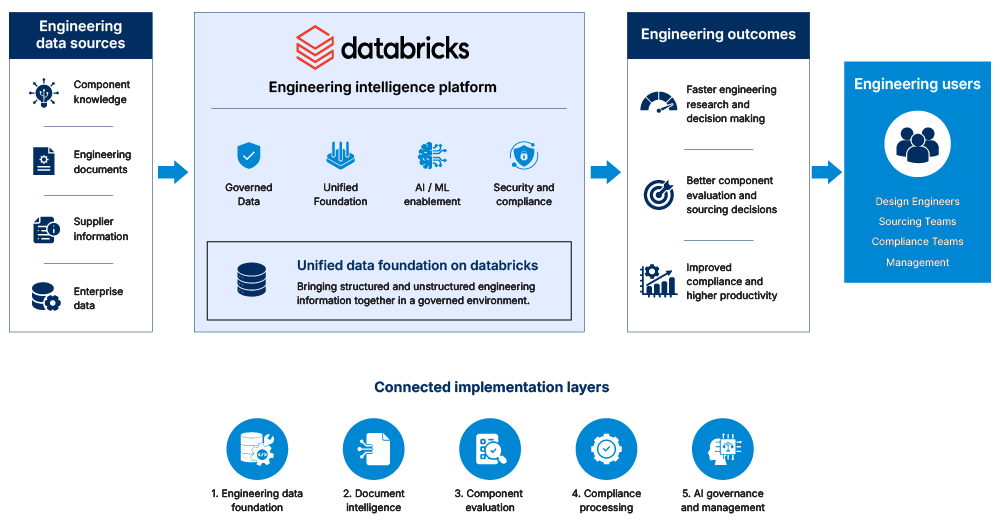
From this foundation, engineering data, document intelligence, component evaluation, compliance processing, and AI governance evolved into connected implementation layers. Each layer addressed a different stage of the engineering workflow while remaining part of the same engineering intelligence architecture.
Building a governed engineering data layer
We established a centralized engineering data foundation by bringing together component libraries, supplier records, technical documentation, and design references from multiple enterprise systems. Standardized ingestion pipelines consolidated those engineering sources within Databricks, creating a common data environment while preserving relationships across connected systems.
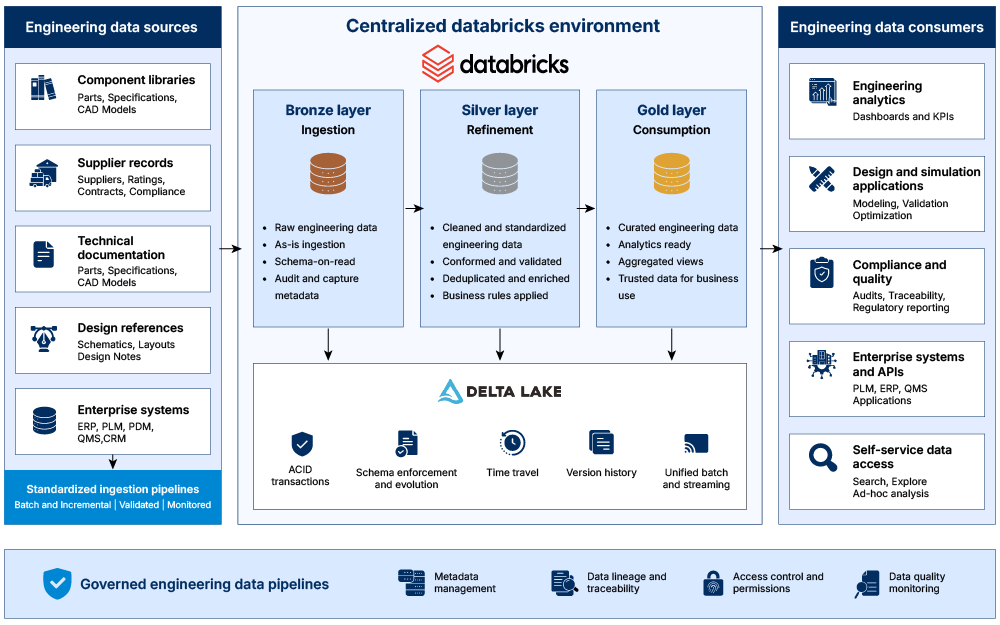
The resulting engineering information moved through Delta Lake, where Bronze, Silver, and Gold layers assigned a defined role to ingestion, refinement, and consumption. Progression across those layers preserved version history, metadata, and lineage for every engineering record throughout its lifecycle.
AI-powered interpretation of engineering documents
We transformed engineering documents into structured engineering knowledge by configuring document intelligence pipelines across datasheets, BOMs, CAD files, application notes, and engineering specifications. Engineering content entered those pipelines, where large language models and structured extraction techniques interpreted complex tables, diagrams, and unstructured documents before extracting technical attributes, operating characteristics, and component specifications.
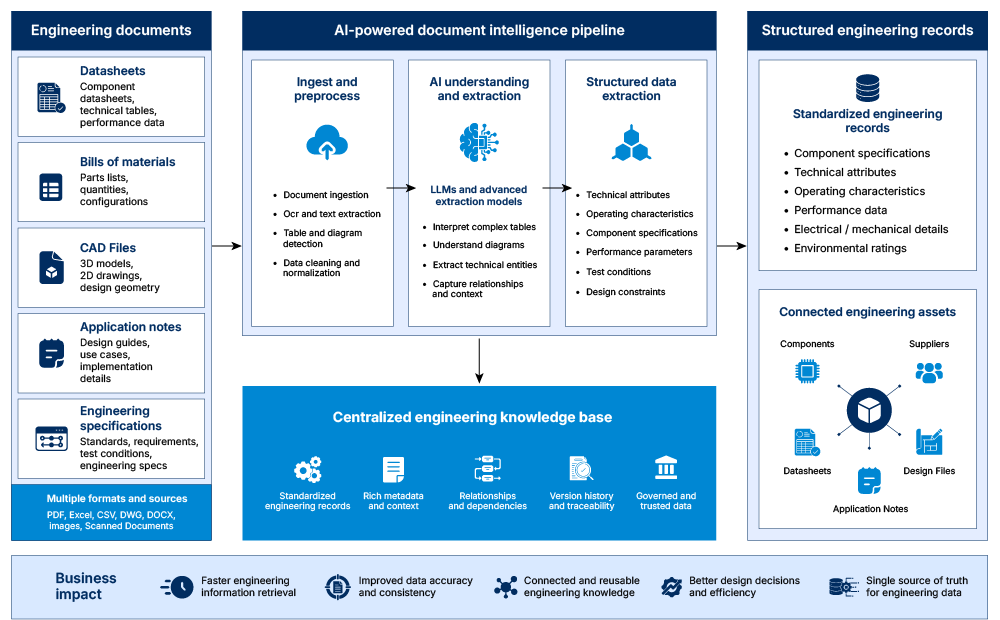
The extracted information was then organized into standardized engineering records containing technical attributes, operating characteristics, and component specifications. Enrichment pipelines connected those records with related components, supplier information, and supporting engineering references throughout the centralized knowledge base.
Intelligent component search and sourcing
We organized component evaluation around a unified engineering data model that combined approved component records, supplier catalogs, lifecycle information, engineering specifications, and sourcing constraints. The unified data model brought engineering and sourcing information together, where AI-assisted discovery workflows assembled the context required for consistent component assessment.
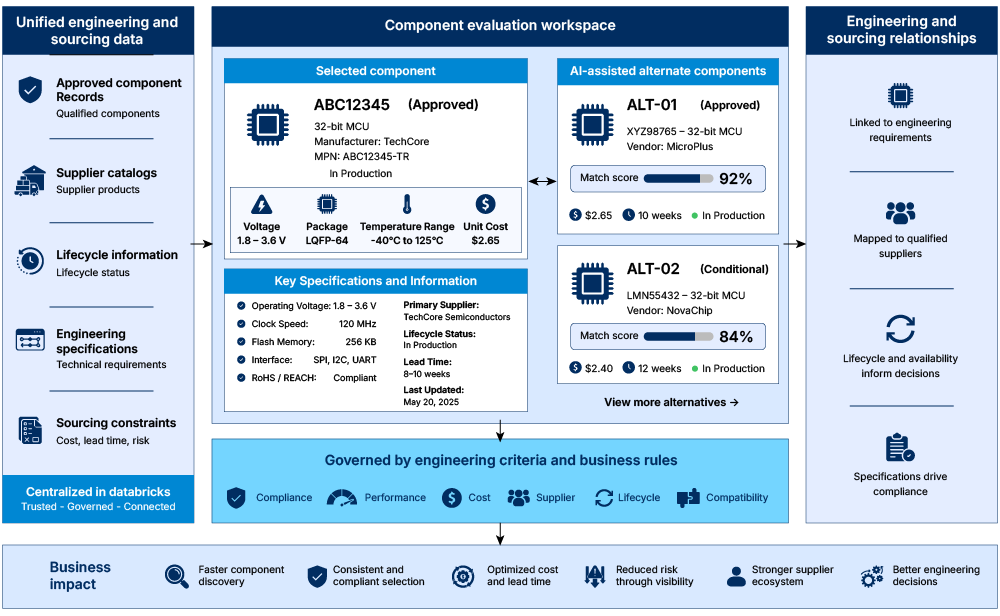
Engineering criteria and business rules governed alternate component assessment across approved supplier ecosystems. Each assessment carried component specifications, supplier records, lifecycle information, and sourcing relationships together throughout the engineering workflow.
Continuous engineering compliance monitoring
We integrated regulatory information directly into the engineering intelligence platform by connecting engineering records with compliance datasets, supplier information, tariff classifications, and lifecycle status. Bringing engineering and regulatory information into the engineering data model allowed compliance requirements, supplier risk indicators, and lifecycle information to move through a common processing framework.
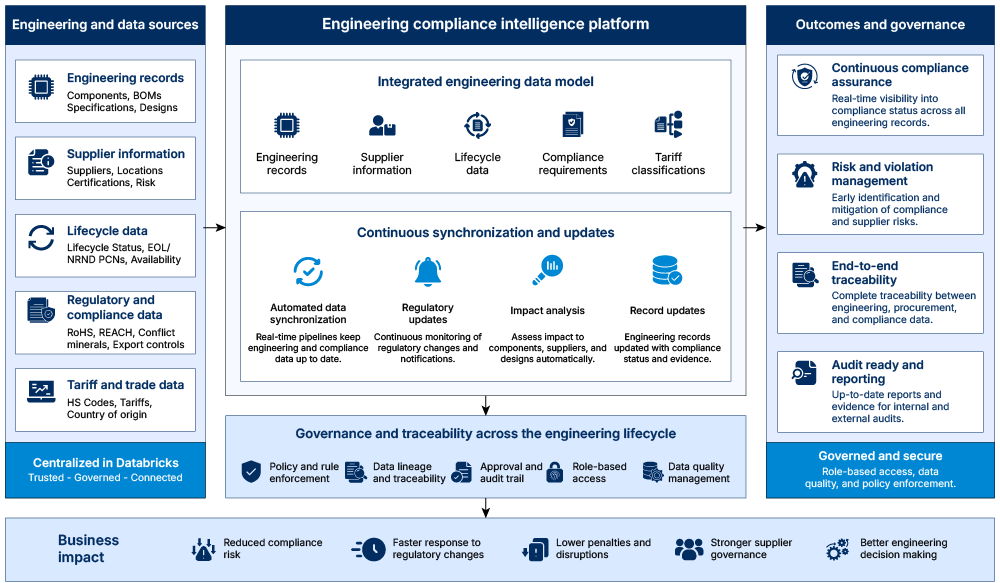
As supplier records and regulatory requirements evolved, automated synchronization pipelines updated connected engineering records across the centralized catalog. Governance rules preserved traceability between engineering information, procurement records, and compliance data throughout the engineering lifecycle.
Centralized AI governance and model management
We centralized engineering knowledge governance, AI model management, and enterprise data administration within a single Databricks environment. Governance began with a common foundation for metadata, lineage, and access controls before Unity Catalog organized those controls across engineering documents, supplier information, and enterprise datasets.
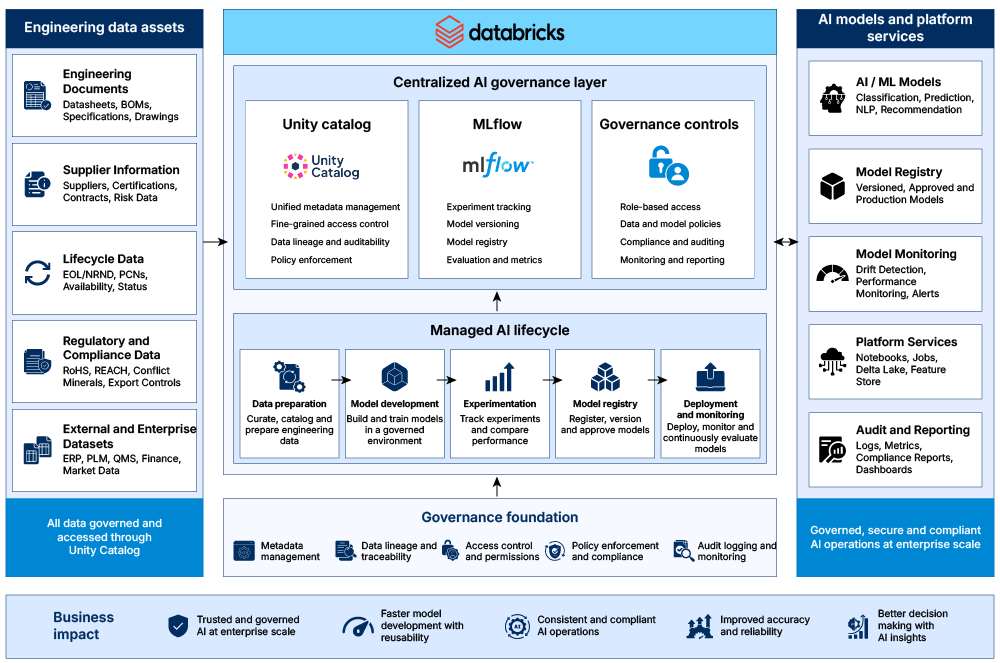
The same governance foundation extended into model development, bringing experimentation, version management, and evaluation under a controlled environment. MLflow tracked experiment configurations, model versions, and evaluation records throughout those activities, while governance policies coordinated oversight across engineering data assets, AI models, and platform services.
Business goals and measurable outcomes
| Business goals | Measurable outcome |
|---|---|
| Accelerated engineering research | 65% reduction in engineering research time enabled by AI-powered document intelligence and knowledge retrieval |
| Simplified component evaluation | 50% reduction in component evaluation effort supported by AI-assisted component discovery and sourcing |
| Faster compliance reviews | 70% reduction in compliance review time driven by automated compliance and lifecycle intelligence |
| Centralized engineering knowledge | Unified engineering information across technical documents, supplier data, and component records |
| Governed AI operations | Centralized governance across engineering data assets, AI models, enterprise metadata, and platform administration |
Tech stack
- Platform:
- Databricks Data Intelligence Platform
- Data architecture:
- Medallion architecture, Delta Lake, Apache Spark
- Data ingestion:
- Structured Streaming, Batch ingestion pipelines
- AI and document intelligence:
- Large language models, Document intelligence, Structured extraction
- Knowledge retrieval:
- Vector search, Semantic search, Retrieval-Augmented Generation (RAG)
- Model management:
- MLflow, Experiment tracking, Model versioning
- Data governance:
- Unity Catalog, Data lineage, Metadata management, Access controls
- Cloud infrastructure:
- Microsoft Azure Cloud Services, Azure App Services
- Engineering data sources:
- Datasheets, BOMs, CAD files, Application notes, Technical specifications
- Enterprise integration:
- ERP, PLM, Supplier catalogs, Engineering repositories
Similar case studies

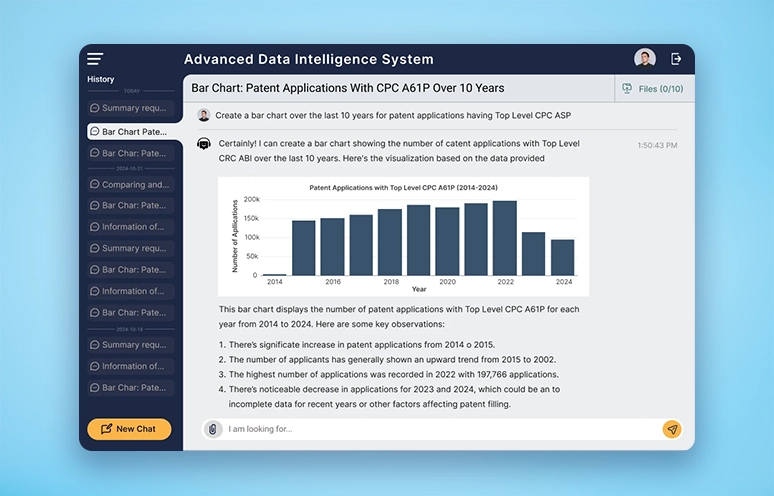
Patent data intelligence system powered by Needle framework
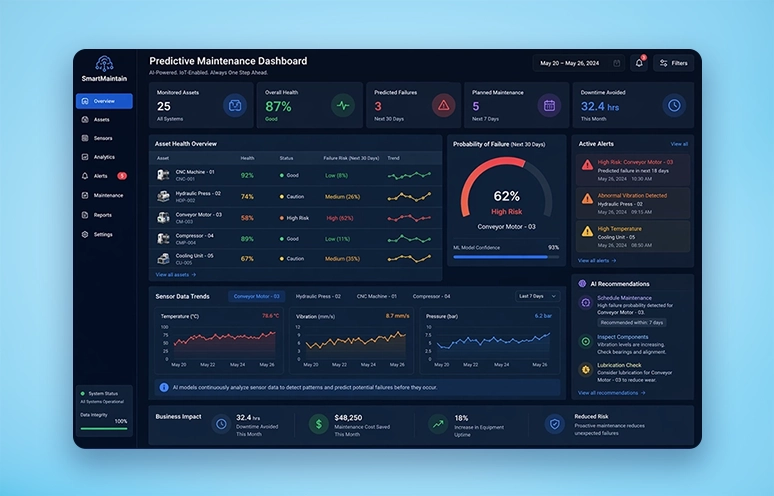
Implemented video analytics for monitoring aerospace manufacturing quality
Connect Now
Our experts would be eager to hear you.

