Cloud-based web application streamlined the supply process and improved warehouse visibility by 85%
Our client is a leader in the supply chain, operating across an extensive supplier network, manufacturers, and logistics partners across multiple regions. They wanted a platform that automatically tracks the inventory and supply chain network. We developed a cloud-based web platform that streamlined supply chain processes, enhanced warehouse visibility by 85%, improved productivity by 50%, and enhanced data accessibility by 100%.
 Industry: Supply Chain
  Business type: Enterprise
 - Services: Cloud-based web application
- Technology: ASP.NET Core API, Angular, MS SQL Server, Microsoft Cloud Services


Client profile
Our client is a key player in the supply chain industry, coordinating with a broad supplier network, manufacturers, and logistics partners across multiple regions. With a service network spread across multiple countries, they manage more than 2K–5K suppliers and channel partners, handles thousands of product movements and logistics transactions daily, and oversees a product portfolio consisting of 10K+ SKUs across various categories.
Technical challenges
As our client’s organization scaled across Asia-Pacific region regions, its supply chain infrastructure struggled to keep pace. Operational gaps and technology limitations were significantly impacting business growth.

Fragmented data
The team reconciled spreadsheets manually as ERP, warehouse, and vendor systems were disconnected. Without unified data, decision-making was delayed and inefficient, eroding trust across teams and partners.

Lack of real-time visibility
Our client used a traditional supply chain system. Thus, they struggled to track inventory and gain real-time insights, causing frequent stock imbalances and missed deliveries, impacting revenue and customer satisfaction.

Complex operations
The organization faced difficulty in streamlining operations across various regions. This created complexities in managing suppliers from multiple regions, transportation partners, and warehouses.

Manual processes
The company relied on manual processes in procurement, inventory management, and logistics, which increased the chances of errors and delays.
Our solution
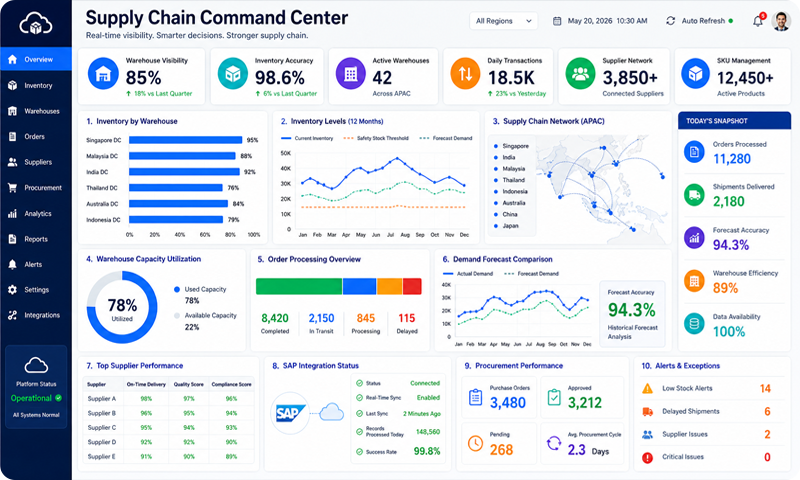
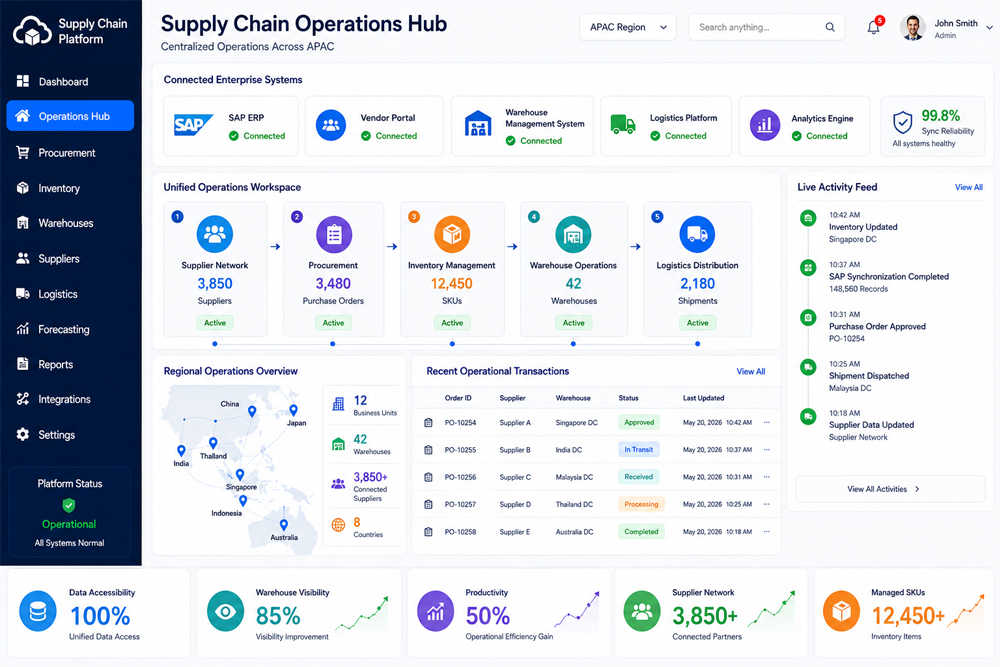
We provided a scalable cloud-based supply chain management solution to help the client streamline supply chain operations. Our team implemented a centralized web platform designed to address fragmented workflows, inconsistent operational visibility, and varying business-unit requirements. A unified platform can seamlessly manage operational data, report workflows, and analytics processes across different functional areas. This enabled our client to improve faster decision-making, enhance process coordination, and boost visibility into supply chain activities across regions.
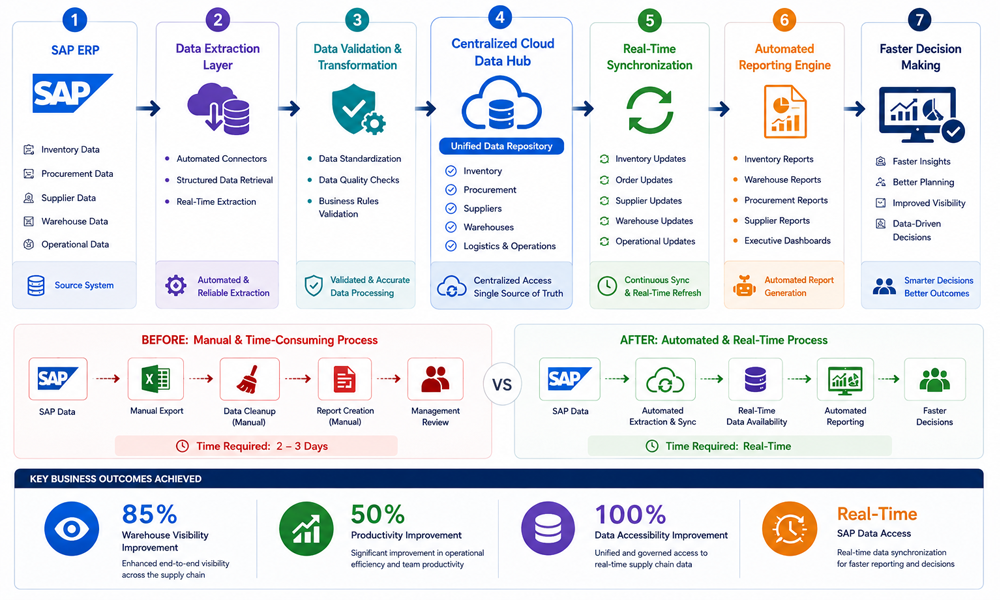
Provided real-time SAP access
Our development team implemented optimized SAP integration connectors and automated reporting workflows after analyzing the client’s existing reporting delays and data dependencies. We configured structured data extraction pipelines and synchronized real-time inventory and operational data to support faster reporting and decision-making processes.
Provided real-time SAP access
Our development team implemented optimized SAP integration connectors and automated reporting workflows after analyzing the client’s existing reporting delays and data dependencies. We configured structured data extraction pipelines and synchronized real-time inventory and operational data to support faster reporting and decision-making processes.
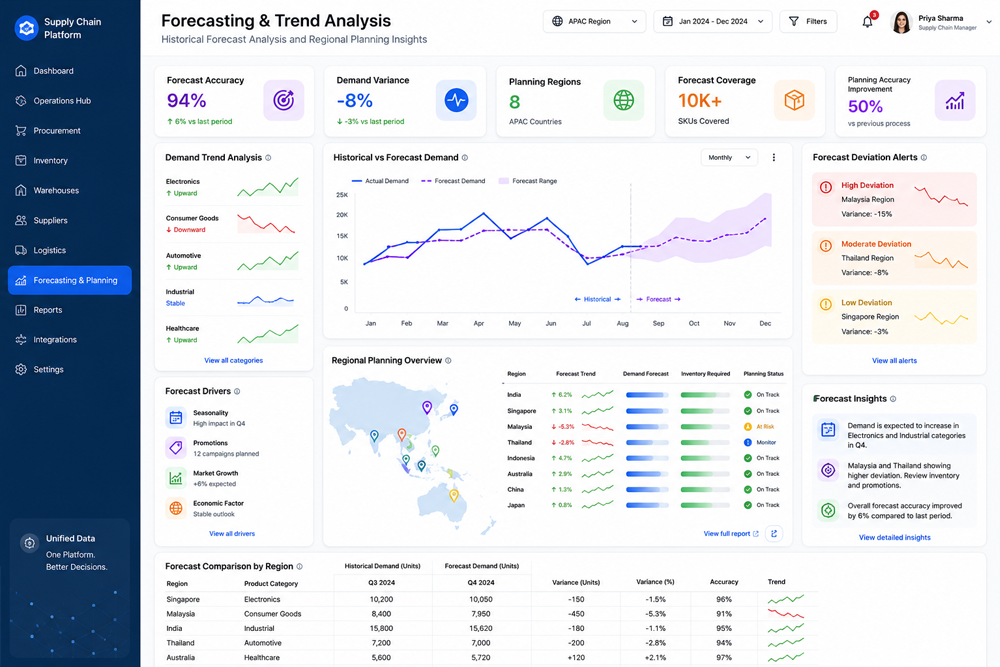
Created forecasting and trend analysis tools
To improve forecast accuracy and help the client identify demand fluctuations earlier, we provided a forecasting and trend analysis solution integrated within the centralized supply chain platform. Based on the gathered operational and forecasting data, we implemented a cloud-based analytics module that consolidated historical demand records, current forecasts, and regional planning data into a unified reporting environment. We also developed interactive forecasting dashboards and comparison views that enabled teams to identify demand shifts, monitor forecast deviations, and improve planning accuracy across future supply chain operations.
Integrated SAP with the web platform and external systems
We integrated the web platform with SAP and external vendor systems through APIs, enabling consistent data flow and faster transaction processing. Integrating SAP with the web platform ensured inventory levels, order statuses, and supplier updates flowed automatically and accurately across every system.
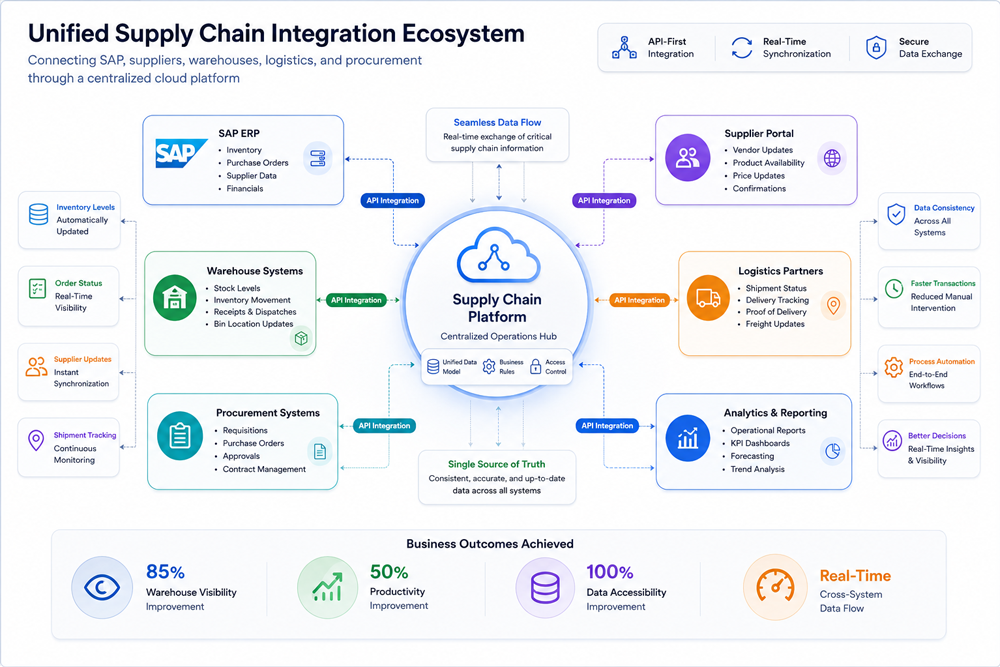
Business goals and measurable outcomes
| Business objective | Business benefit delivered |
|---|---|
| Enhanced visibility | Enhanced warehouse visibility by 85% |
| Increased efficiency | Improved productivity by 50% by automated data handling |
| Cost reduction | Optimizing inventory levels and improving supplier coordination, reduced excessive stock and shipping costs, and minimized waste. |
| Improved collaboration | Centralized platform improved collaboration between suppliers and stakeholders, ensuring smoother operations and fewer disruptions. |
| Scalability and flexibility | Cloud infrastructure scaled business growth without additional IT investments. |
Tech stack
- Frontend:
- Angular, TypeScript, HTML5, CSS3
- Backend:
- ASP.NET Core API, C#, REST APIs
- Database:
- Microsoft SQL Server
- Cloud Platform:
- Microsoft Cloud Services (Azure), Azure App Services
- Integrations:
- SAP, Vendor Systems, Enterprise APIs
- Analytics:
- Forecasting Dashboards, Demand Planning, Warehouse Visibility Reporting
- Data Engineering:
- Real-Time Data Pipelines, SAP Data Synchronization
- Security:
- SSL/HTTPS, Role-Based Access Control (RBAC)
- Platform Access:
- Cloud-Based Supply Chain Management Web Application
Similar case studies
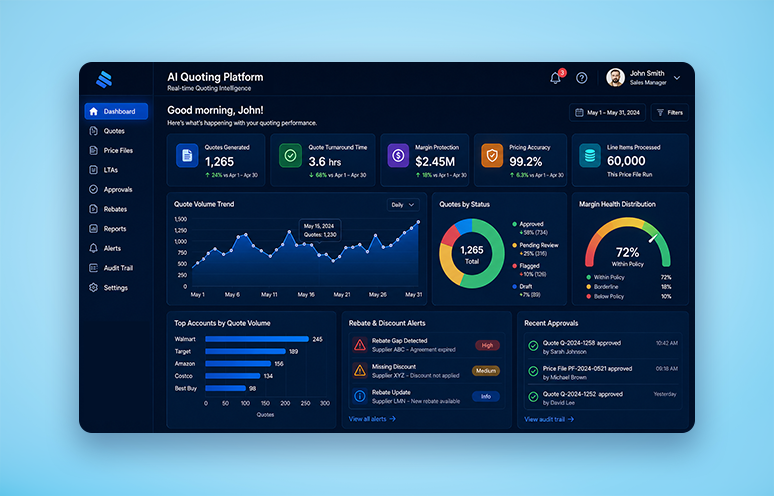
Implementing AI-driven quoting for a supply chain services provider
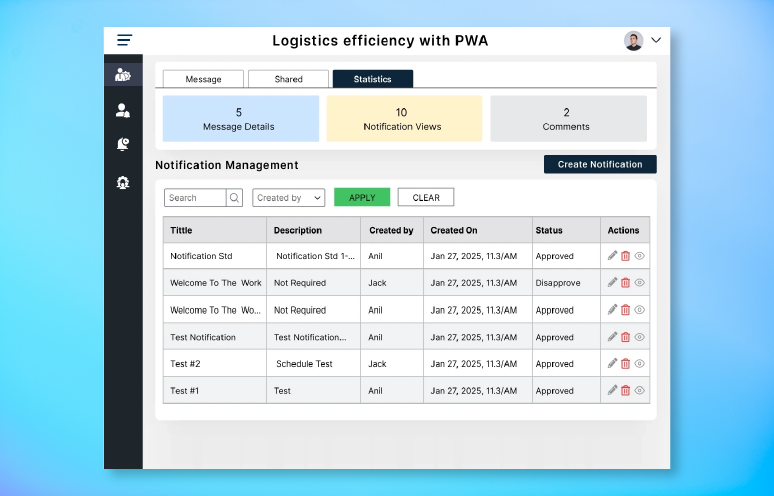

Salesforce implementation for a supply chain services provider
Connect Now
Our experts would be eager to hear you.

