Cloud transformation services
Migrate securely, modernize completely, and scale elastically with cloud architecture engineered for your enterprise growth.
Talk to a cloud expertMigrate securely, modernize completely, and scale elastically with cloud architecture engineered for your enterprise growth.
Talk to a cloud expertOur Clients



Your IT foundation affects how quickly you can respond to new customer needs or market changes. But when older systems cannot keep up with modern business demands, deployment slows down, maintenance work increases, and security becomes harder to control. Cloud transformation services help by moving key workloads to the cloud, updating important applications, and building a setup that is easier to manage, faster to run, and more cost aware. Softweb Solutions delivers cloud transformation with a team of 120+ certified cloud specialists. We design strategies aligned with your goals, execute migrations without disruption, and optimize environments for performance and agility. Our clients have achieved faster release cycles, higher system availability, and reduced infrastructure complexity through our cloud transformation engagements.

We begin by understanding how your systems work today and what your business needs from them. From there, we outline a clear plan for your move to the cloud, showing what should go first and how each step connects to your goals.

We structure the migration so applications and data move in clear stages. Some workloads are moved largely as they are, others are adjusted to use cloud-native services, and some are refactored when a deeper change is required. Each stage ends with testing to ensure the migration has worked as planned.

We create applications that work the way the cloud works by grouping features into clear services, defining how they communicate with each other, and automating how they are deployed and run. Each application is built to handle changing demand, reduce downtime, and accept frequent updates.

Our approach to security is practical and structured which ensures consistent standards across all workloads, eliminating control gaps and compliance risk. We strengthen access controls, protect sensitive information, and ensure your systems meet regulatory expectations.

We review how your cloud resources are used and tune the environment so that capacity, performance, and configuration are better aligned with actual demand. Guided changes help you maintain performance targets while keeping spend predictable and justified.

We design data architectures that consolidate information across your cloud environment, enabling advanced analytics and AI capabilities. Our data modernization services include data lake implementation, ETL pipeline development, and integration with machine learning platforms.

Our team provides continuous management and monitoring of your cloud environment, handling updates, security patches, system checks, and issue resolution. As a result, your systems stay stable and optimized while your team focuses on business priorities instead of operational overhead.

We bring your older applications aligned with cloud requirements by analyzing their architecture, adjusting key functions, and refining how they manage data. Each improvement ensures the application fits naturally into your cloud setup and supports everyday operations.

We bring structure to cloud costs by linking usage data with budgets and ownership. Tagging, spend reviews, and targeted recommendations help you reduce unnecessary spend, support key initiatives, and keep cloud bills aligned with business priorities.
Industry
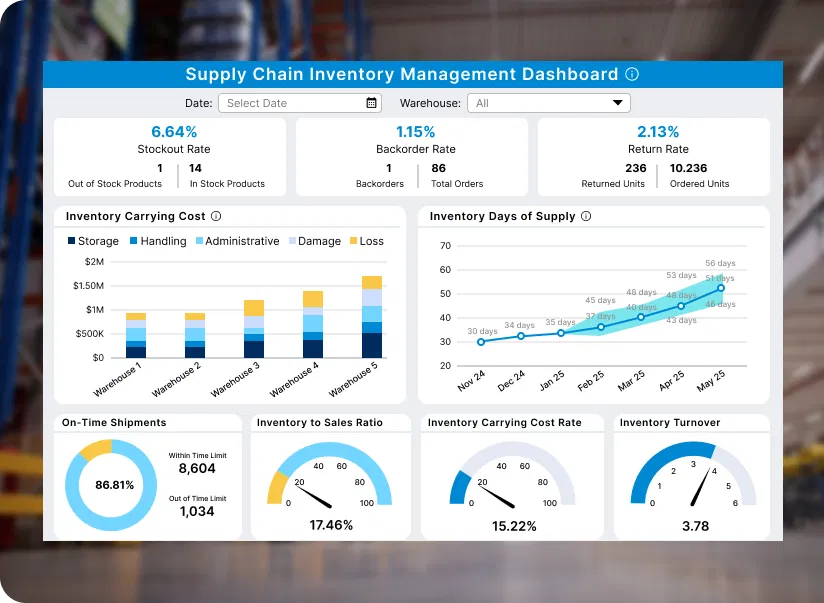
Supply Chain
Technologies
Microsoft Azure, Asp .NET Core API, Angular, MS SQL Server
Challenges
Business impact
Client
Global Automobile Manufacturer of Passenger Vehicles

Industry
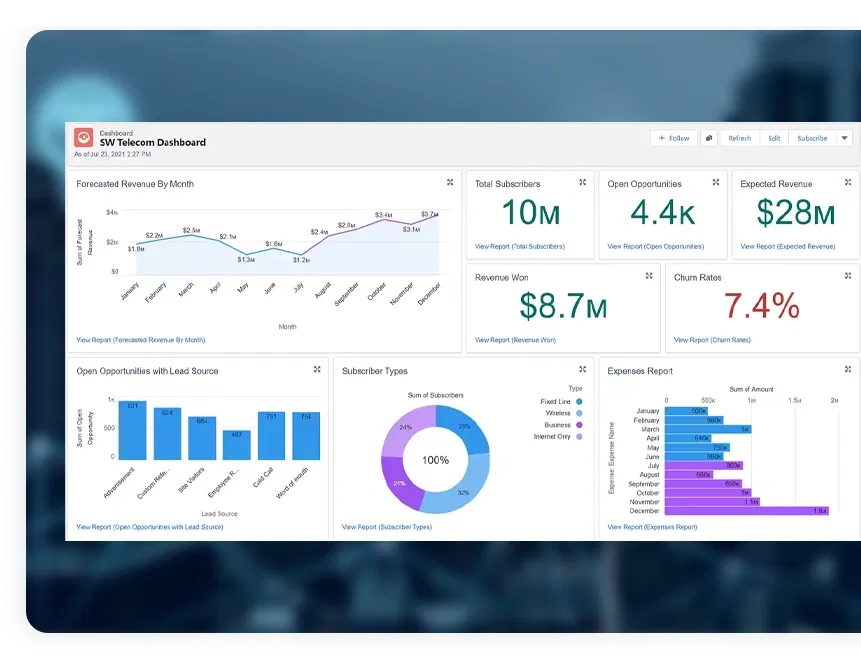
Telecom
Technologies
Salesforce Sales Cloud
Challenges
Business benefits
Client
A major player in US telecommunication industry
Words that motivate us to go above and beyond! A glimpse of our customers who make us shine among the rest.

Softweb has been our partner for over a decade in professional IT services including production and application development support. They support us on customer experience and cloud services as well.
Rimma Fuchs

The team at Softweb Solutions delivered exceptional digital transformation services within the agreed time frame. Throughout our large-scale projects, we formed a fantastic partnership with Softweb Solutions. Softweb’s DevOps team demonstrated adaptability, encouraging our input during development. They seamlessly modernized the legacy system, including our data warehouse, that meets current market demands.
Mina Abdelkodous
We follow a structured approach that transforms your infrastructure requirements into operational cloud environments. Each phase builds on validated outcomes, ensuring your cloud architecture aligns with business goals and integrates smoothly with existing systems.
We analyze your infrastructure, applications, and business objectives to identify workload dependencies and cloud readiness. From this foundation, we define success metrics, select migration candidates, and establish integration requirements.
Building on what we learned in the assessment, we outline a practical roadmap showing workload migration sequencing, platform selection, and project guardrails. The roadmap provides visibility into execution order, timeline, and risk management, ensuring clarity throughout your transformation.
We translate your goals and technical needs into an architecture that supports them. The design covers workload handling, integration with existing systems, data movement, and the security controls needed for a reliable setup.
With architecture finalized, we execute migrations using strategies appropriate to each workload. Rehosting moves applications quickly with minimal changes. Replatforming optimizes cloud capabilities. Refactoring rebuilds applications for cloud-native performance. We validate each migration before proceeding to the next.
Before the migration is completed, we verify system performance across real-world scenarios and validate that applications function correctly in their new environment. Through validation, we confirm that security controls protect your data, performance meets requirements, and integrations operate as designed.
After deployment, we optimize resources based on actual workload patterns and refine configurations for cost and performance. Documentation, hands-on training, and knowledge transfer sessions enable your team to manage the environment confidently and independently.
After your teams take ownership of the cloud environment, we continue to monitor how workloads evolve. We run regular checks on performance, stability, and cost, then make incremental changes to configuration and capacity so the environment stays steady, efficient, and able to support new demands.
We bring certified expertise across all major cloud platforms combined with strategic implementation experience. Every engagement benefits from platform-specific best practices and cross-cloud architectural knowledge.


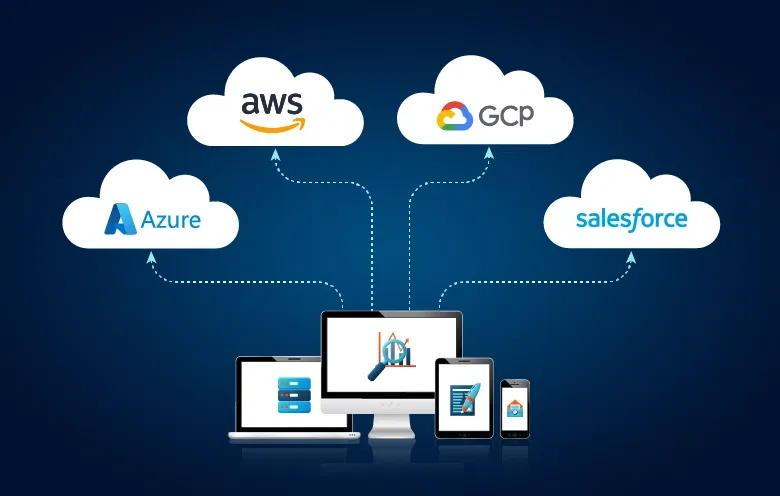
21+ years of enterprise software expertise with proven cloud transformation capabilities across AWS, Azure, and Google Cloud platforms
120+ certified cloud professionals delivering migration, modernization, and managed services at scale
End-to-end transformation capability from strategy and assessment through migration execution, optimization, and ongoing managed services
Domain expertise across industries including manufacturing, finance, healthcare, retail, and supply chain with compliance knowledge for regulated sectors
Outcome-focused engagement models with clear milestones, transparent communication, and metrics aligned to your business objectives
Cloud transformation services encompass the complete process of migrating your IT infrastructure, applications, and data from on-premises environments to cloud platforms. These services include strategy development, architecture design, migration execution, and ongoing optimization. The goal is to modernize your technology foundation while improving scalability, reducing costs, and enabling faster innovation cycles.
Cloud transformation solutions include migrating email and collaboration tools to Microsoft 365, moving ERP systems to cloud-hosted platforms, containerizing legacy applications for Kubernetes deployment, implementing data lakes for advanced analytics, and building serverless architectures for new applications. Each solution addresses specific business requirements while using cloud capabilities for improved performance and cost efficiency.
The choice between public, private, and hybrid cloud depends on your data sensitivity, compliance requirements, performance needs, and cost considerations. Public cloud suits workloads requiring elastic scalability and lower upfront investment. Private cloud provides greater control for sensitive data and regulated industries. Hybrid cloud combines both, allowing you to keep sensitive workloads on-premises while leveraging public cloud for variable demand and innovation initiatives.
The four main cloud service models are Infrastructure as a Service (IaaS), providing virtual computing resources, Platform as a Service (PaaS), offering development and deployment environments, Software as a Service (SaaS), delivering applications over the internet, and Function as a Service (FaaS), enabling serverless computing. Each model offers different levels of control, flexibility, and management responsibility.
Cloud migration is the technical process of moving applications, data, and workloads from on-premises to cloud environments. Cloud transformation is broader, encompassing migration plus modernization of applications, optimization of processes, and cultural changes that enable organizations to use cloud capabilities more effectively. Migration moves existing systems as they are, while transformation reshapes how the business operates.
Yes. Cloud transformation reduces costs through elimination of physical infrastructure maintenance, pay-as-you-go pricing models that match spending to actual usage, automated scaling that prevents over-provisioning, and reduced need for on-premises IT staff. Infrastructure cost savings depend on factors including current environment complexity, workload mix, and ongoing optimization practices.
Cloud transformation improves business continuity by adding geographic redundancy, automated recovery, high-availability design, and rapid scaling. Cloud providers operate multiple data centers with failover capabilities that exceed what most organizations can maintain on their own.
Infrastructure designed for today. Architecture ready for tomorrow.
Begin with a cloud readiness assessment that identifies migration priorities and optimization opportunities specific to your environment.
 All our projects are secured by NDA
 100% Secure. Zero Spam.
By submitting this form you agree with the terms and privacy policy of Softweb Solutions Inc.