Share
Share

 ChatGPT
 Perplexity
 Claude
 Grok
Grok
 Google AI Mode
Artificial Intelligence (AI) is no longer experimental. According to McKinsey’s The State of AI report, nearly nine out of ten organizations regularly use AI in at least one business function. Yet adoption has not translated into impact for most organizations. Pilots show early promise and then stall before reaching production. Budgets increase while outcomes remain unclear. Organizations find themselves stuck between initial progress and scalable results.
In most organizations, the reason that they fail to adopt enterprise AI is less likely to be the technology itself. As outlined in a recent McKinsey report of over 400 AI projects, the two most common obstacles to implementing AI in business are a lack of a clear AI strategy (43%) and functional silo structures (30%). Business transformation through the use of AI depends upon the establishment of solid foundations such as quality data, shared responsibility across teams, and aligning teams with the organization’s overall objective.
In this blog post, we break down these obstacles into six basic types and provide recommendations on how to overcome them.
Why is AI adoption crucial for business growth?
Organizations of any size can now access AI. Cloud ecosystems and pre-trained AI models make it easier to launch an AI initiative than it was a few years ago. However, business impact starts with foundations, including data readiness and integration with legacy systems. It also requires governance that ensures ownership, data quality standards, and AI model maintenance.
A clear business purpose behind AI adoption drives faster gains in decision quality, efficiency, and overall performance. These gains explain why AI adoption is central to growth strategies. To capture the full value of AI, organizations must first address the structural and organizational challenges that influence every stage of implementation.

Major challenges companies face while implementing AI
AI works best when organizations are ready from a business and operational standpoint, and not just technologically. Without clear goals, connected data, modern systems, and governance, AI initiatives rarely deliver consistent business value.
-
Lack of quality data
Any discussion about AI adoption challenges sooner or later comes back to data quality. Data is critical to AI’s ability to learn because the AI relies on the data that is presented to it through Machine Learning (ML). Therefore, when data is split across many locations (silos) or fragmented across multiple systems, the algorithm may not be able to learn effectively.
For example, marketing teams may store their customer insights in a different location than finance and operations. Thus, marketing has a ‘lead’, while finance refers to it as an ‘inactive account’, and so on. The names of these entities vary greatly between departments and make it very difficult for AI systems to learn accurate and consistent patterns.
How to solve it
Determine which data is needed to support your use case and clarify who has ownership over that data. It is also crucial to set agreement on the minimum acceptable standards of quality for this data so that everyone has the same baseline expectations for the data. Data governance should be continually practiced and should not just be a one-off effort to clean up the data. Using master data management can be helpful in creating a single, accurate view of the organization’s data across all departments.
Your action checklist
- Assign individuals to oversee data quality, access, and control (e.g., Data Owners).
- Create a data catalog, which is a collection that identifies datasets, where you can find them, and what type of information they contain
- Invest in integration platforms, which allow organizations to integrate data from different sources into one location.
- Create Standards, including formatting standards, to allow for more effective management of unstructured text, images, and other unstructured content
-
Lack of in-house AI expertise
The talent gap in AI is not just about finding people who understand neural networks or can code in Python. It’s about the scarcity of professionals:
- Who can bridge technical capabilities with business understanding
- Who can navigate the organizational complexity of changing how work gets done
- Who know how to select the right use cases
As AI continues to develop, it becomes more difficult to keep pace with its progress. The abilities needed to implement ML models are very different from those needed to create, implement, and adapt language models. Agent-based systems raise the bar further that a person with a significant amount of experience operating in this field needs to keep learning. Moreover, most organizations do not have the luxury of paying attractive salaries as the market continues to increase compensation for AI professionals.
How to solve it
We strongly consider starting with an internal development of human resources through structured training. From there, partners should employ AI consulting services that can supplement the current capabilities and help expedite AI adoption. Establish a center of excellence to centralize the knowledge of AI across the business units. Consider creating internally developed paths to reward AI employees, providing opportunities for their continued professional development with your organization.
Your action checklist
- Launch training programs in machine learning, data engineering, and AI operations
- Partner with universities or bootcamps to create sustainable talent pipelines
- Leverage low-code platforms that enable domain experts to contribute without deep programming knowledge
- Establish AI centers of excellence serving multiple departments
-
High implementation and operational costs
The financial reality of enterprise AI adoption shocks organizations that underestimate the true investment required. The visible costs, which include software licenses, cloud compute, initial development, represent just the beginning. What catches companies off guard are the ongoing operational expenses that persist long after deployment.
According to International Data Corporation (IDC), in the first half of 2024, organizations increased their spending on compute and storage hardware for AI deployments by 97% year-over-year, totaling $47.4 billion. These infrastructure costs don’t plateau once a model goes into production. AI systems consume heavy computational resources for training and inference. As your usage scales, so do cloud bills. Storage requirements balloon as data accumulates. And maintaining model performance demands continuous retraining, which means ongoing compute cycles and data preparation work.
Organizations that succeed financially with AI do two things well. First, they align initiatives with clear business outcomes that justify the investment. And second, they manage costs strategically by right-sizing infrastructure, automating where possible, and focusing resources on high-impact use cases rather than spreading efforts too thin.
How to solve it
Build business cases that quantify expected benefits against realistic cost projections for each AI initiative. Implement FinOps practices that continuously monitor and optimize spending across compute, storage, and operational overhead. Prioritize investments by funding three high-impact initiatives which beat underfunding ten that never reach production.
Your action checklist
- Right-size infrastructure by choosing cloud configurations matching actual workload needs
- Use spot instances and reserved capacity to reduce compute expenses
- Automate model operations to minimize manual overhead and ongoing costs
- Consider edge deployment where local processing reduces cloud bills
-
Legacy technology constraints
Modernization challenges in AI adoption prove more difficult than anticipated. It is because legacy systems were not designed for the data-intensive, real-time workflows that AI requires. These older platforms lack the APIs, integration capabilities, and architectural flexibility that modern AI applications demand. They store data in formats that AI cannot consume easily. These platforms process information in batches when AI needs streaming data. Legacy systems come with rigid security rules that don’t align with how AI models access and process data.
Companies need to extract value from existing systems while simultaneously building AI capabilities that those systems weren’t designed to support. The solution rarely involves ripping and replacing everything. Instead, it requires thoughtful integration strategies that connect old and new. It also depends on data architectures and middleware layers that bridge different technologies and help systems communicate.

How to solve it
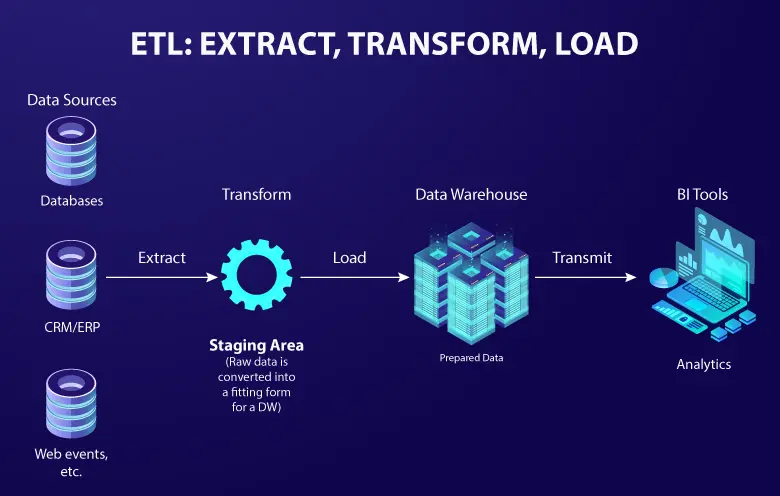
Map where critical data lives and how AI applications need to access it, then build API layers exposing legacy data in AI-consumable formats. Implement data pipelines that extract, transform, and standardize information from multiple sources while considering middleware platforms as translators. For unchangeable systems, create data replication strategies copying essential information to AI-accessible repositories.
Your action checklist
- Conduct integration assessments identifying connection points between legacy and AI systems
- Build APIs and microservices that expose existing data without modifying core systems
- Implement ETL pipelines standardizing data formats across different platforms
- Deploy middleware solutions bridging communication between old and new technologies
-
Strategic and organizational hurdles
The absence of a coherent AI strategy ranks among the most common reasons AI initiatives fail to scale. Without clear direction, teams chase use cases based on urgency or curiosity rather than business value. Over time, this keeps AI from developing into a scalable, organization-wide capability.
The organizational dimension adds another layer of complexity. Challenges in AI automation adoption reflect resistance from teams worried about job displacement. Managers feel concerned about losing control over familiar processes and departments protective of their data and autonomy. Reports from Deloitte and IBM claim that when people and processes do not align from a safety and efficiency viewpoint, you will not realize the full value of AI.
How to solve it
Develop a comprehensive AI strategy by documenting your vision, priority use cases, and implementation roadmap. Establish an AI steering committee with executive representation that reviews initiatives, allocates resources, and removes organizational barriers. Build change management programs that prepare teams for new workflows while communicating progress transparently.
Your action checklist
- Create use case evaluation frameworks that assess impact, feasibility, and strategic alignment
- Implement portfolio management that balances quick wins with transformational projects
- Secure visible executive sponsorship that reflects active involvement beyond funding
- Communicate AI’s purpose as augmentation, not replacement, and address workforce concerns
-
Security, risk, and governance concerns
The expansion of AI capabilities also broadens the organization’s risk surface. Models trained on sensitive data might inadvertently expose that information through their outputs. AI systems making automated decisions could exhibit bias that leads to discrimination. Organizations that use public, private, and open-source large language models are concerned about data privacy, security, data sovereignty, and regulations. And the “black box” nature of many advanced models makes it difficult to explain why specific decisions were made, which is a serious problem in regulated industries.
Leading organizations treat AI governance as a core priority rather than an afterthought. They establish clear guidelines for data usage, implement monitoring systems that track model behavior in production, create review processes for high-stakes applications, and build accountability mechanisms that ensure AI systems serve their intended purposes without creating unacceptable risks.
How to solve it
Establish an AI governance framework addressing data privacy, security, bias, explainability, and compliance from the start. Create model review boards evaluating high-risk applications before production deployment while implementing continuous monitoring tracking performance and potential bias. Partner with legal and compliance teams early to address regulatory requirements.
Your action checklist
- Develop clear policies for handling sensitive data, when it’s used, protected, and who approves access
- Build audit trails documenting training data, model versions, and decision logic
- Implement real-time monitoring systems tracking model performance and data drift
- Train teams on responsible AI principles making ethics integral to design decisions
-
Scaling AI beyond the pilot stage
The most frustrating challenge companies face is the “pilot trap”. Such initiatives work beautifully in controlled environments but fail when expanded to the real world. According to The State of AI report, the majority are still in the experimenting or piloting stages, with approximately one-third reporting that their companies have begun to scale their AI programs. This gap between proof-of-concept and production reveals fundamental differences in what it takes to make AI work at enterprise scale.
Pilots typically operate on clean, curated data sets that someone manually prepared. They run on dedicated infrastructure without competing workloads. They serve a small user base that’s willing to tolerate occasional issues. And they exist outside the full complexity of regulatory requirements, security standards, and integration dependencies that production systems must satisfy.
Scaling means confronting all those realities simultaneously. Data quality issues that were manually fixed in pilots must be addressed systematically. Infrastructure that supported a dozen users must handle thousands. Models that worked with careful oversight must operate autonomously with appropriate safeguards. And processes that looked impressive in demos must integrate seamlessly into existing workflows without disrupting business operations.
How to solve it
Adopt MLOps practices that automate model deployment, monitoring, and retraining using continuous integration and deployment pipelines. Implement comprehensive observability tracking model performance metrics, data quality, and system health while creating feature stores for consistent inputs. Start small with proven use cases, learn from production experience, then expand based on validated results.
Your action checklist
- Build CI/CD pipelines specifically for AI models enabling automated testing and deployment
- Establish clear criteria for when models need retraining and automate that process
- Design fallback mechanisms activating when models perform below acceptable thresholds
- Document everything, architecture, training procedures, benchmarks, and deployment configurations


Common AI adoption challenges and how to solve them
AI adoption challenges rarely exist in isolation. Each barrier has a corresponding solution. Applying them deliberately enables organizations to move from stalled pilots to scalable, business-ready AI implementations.
| AI adoption challenge | Solution |
|---|---|
|
|
|
|
|
|
|
|
|
|
|
|
Where to focus next to move past AI adoption challenges
Now that you have explored the reasons AI programs stall, you likely recognize similar patterns within your organization. Whether it’s scattered data, lack of internal expertise, unclear priorities, or systems that don’t support modern workflows, these gaps slow down your AI adoption. Acknowledging these challenges is the first step toward adopting AI with confidence.
The next step is choosing a structured path. Begin by assessing readiness, clarifying your highest-value use cases, and identifying where you need better data, better processes, or external expertise. Organizations that take a methodical, outcome-driven approach unlock AI’s full potential faster and with fewer setbacks. This clarity is what sets out successful AI programs apart from those stuck in pilot mode.
FAQs
1. What are common obstacles to AI adoption in different industries?
AI adoption barriers vary significantly by sector, though universal challenges persist across all industries. Manufacturing struggles with equipment integration, healthcare with regulations, finance with explainability, and retail with real-time processing. However, most sectors share common barriers including data quality issues, talent shortages, and legacy system constraints. Scaling beyond pilots remains universally difficult.
2. What is required for a business to successfully adopt AI?
Successful AI adoption requires quality data with proper governance, skilled teams blending technical and business expertise, and clear strategy aligned with outcomes. Modern infrastructure, robust security frameworks, and organizational readiness including executive sponsorship are essential. Missing any element significantly reduces the probability of achieving meaningful value.
3. How do I know if my company is ready for AI adoption?
To assess readiness, evaluate whether you have specific use cases with clear value, accessible quality data, and technical capability through internal teams or partnerships. Evaluate leadership commitment beyond initial funding and team willingness to change workflows. Honest answers reveal if you’re ready or need to build foundational capabilities first.
4. What types of data do I need before I can use AI?
The data requirements for AI implementation depend entirely on your specific application and business objectives. Required data depends on your use case: predictive models need historical patterns, NLP needs domain text, and computer vision needs labeled images. All applications require quality data that’s accurate, complete, accessible, and sufficient for training. Identify your use case first, then determine necessary data.
5. How do I integrate AI into my existing legacy systems?
Integration strategies should balance technical feasibility with business disruption, requiring careful architectural planning. Integration uses API layers for connecting systems, data pipelines extracting legacy data, middleware translating between technologies, or hybrid architectures running AI separately. The right approach depends on your system landscape and use cases. Partnering with AI development or consulting services often accelerates integration.
6. What are the hidden costs of AI adoption that companies overlook?
Beyond obvious technology investments, AI initiatives accumulate substantial indirect expenses that catch organizations off guard. Hidden costs include data preparation time, ongoing model maintenance and retraining, change management, system integration work, and specialized deployment infrastructure. Security enhancements and opportunity costs of reallocated talent add up. Organizations also underestimate required experimentation before achieving production-ready solutions.