How Softweb Solutions eliminated days of manual invoice work for a global manufacturer
A credit control team at a global manufacturing company spent two to three days during every cycle retrieving overdue invoices from SAP while validating payments before sending reminders. Softweb Solutions deployed a Power Automate Desktop bot to automate the entire process, from SAP login to personalized email dispatch, with no manual effort required.
 Industry: Manufacturing
  Business type: Large enterprise
  Services: RPA and Power Automate Desktop development, SAP integration, workflow automation
 Technology: Microsoft Power Automate Desktop, SAP ERP, Microsoft Excel, Outlook
Client profile
Our client is a large-scale manufacturing company with operations spread across multiple global regions. Founded more than three decades ago, the company has established a strong presence in precision industrial manufacturing, supplying components and finished goods to OEMs and distribution partners across North America, Europe, and the Asia-Pacific.
The company manages a highly complex financial ecosystem that includes thousands of active vendors and customer accounts. A credit control team of more than 12 finance professionals handles invoice tracking, payment reconciliation, and collections across large-scale operations. With thousands of invoice cycles processed every month and annual revenues exceeding $200 million, the company depends on speed and accuracy in financial operations to maintain healthy cash flow and profitability.
Technical challenges
The credit control team managed a high-volume invoicing cycle that ran on entirely manual effort. During every billing period, the team logged into SAP to export aging reports along with pending invoice records. They matched the reports against received payments before preparing reminder emails for each customer individually. The process consumed two to three full working days per cycle and still produced inconsistencies. Four challenges made the situation unsustainable:

Report overload
Pulling and reconciling SAP reports manually consumed two to three full days per billing cycle.

Validation errors
Cross-referencing thousands of invoices against payments led to frequent mismatches and missed entries.

Reminder delays
Manually drafting and sending personalized emails to each customer caused late and inconsistent follow-ups.

Scaling limits
As invoice volumes grew with new customers, the manual process became increasingly unsustainable to maintain.
Our solution
Our team began by meeting with the credit control team and finance managers to understand the full invoicing cycle. We mapped each manual activity, starting from SAP login through report extraction and payment matching before reaching email dispatch. Our assessment identified automation opportunities that could remove operational friction without affecting existing business rules or customer-specific payment terms.
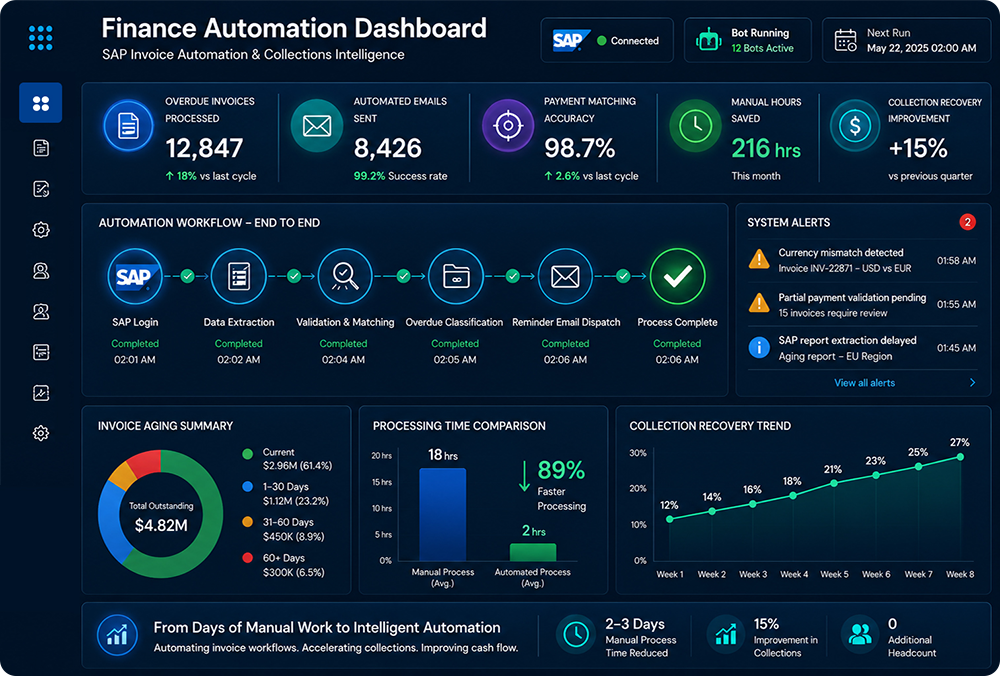
What followed was a purpose-built RPA solution using Power Automate Desktop. Each component of the bot addressed a specific pain point the team had lived with for years. The solution was designed to run on a schedule, handle exceptions gracefully, and scale without adding headcount.
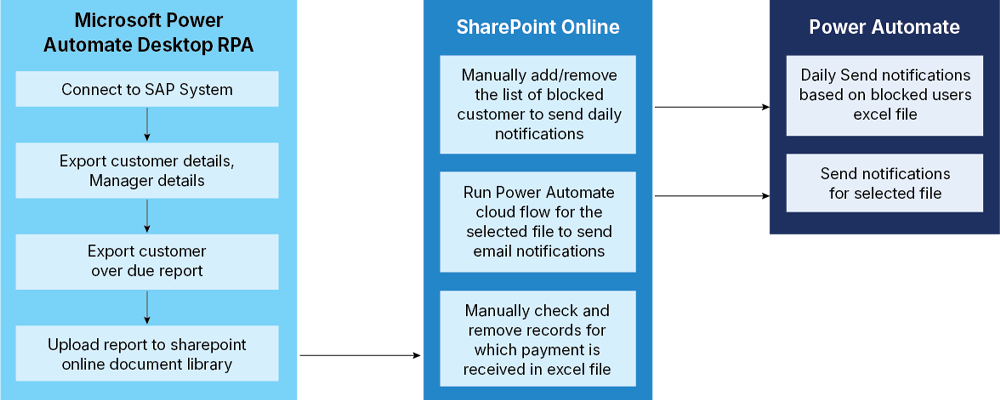
Structured workflow analysis and rules definition before automation build
We started by running structured working sessions with the credit control team to document every step of the manual invoicing cycle. The team explained their SAP navigation workflows together with the logic used to identify overdue invoices. They also described the process followed for handling exceptions such as partial payments or currency mismatches. We translated this institutional knowledge into a clear automation blueprint before writing a single line of flow logic.
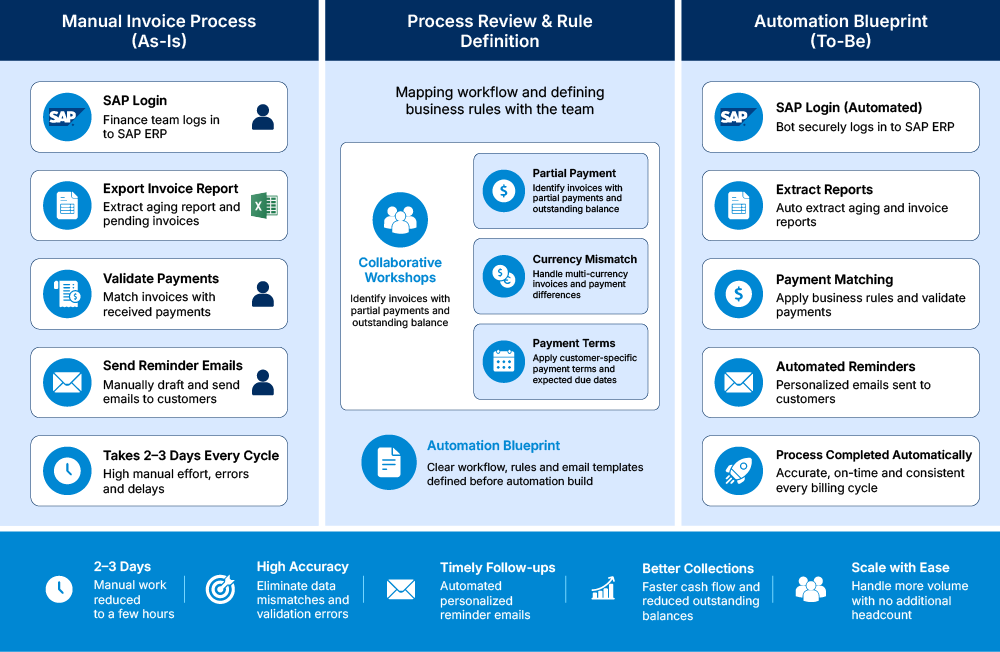
Together with the credit control team, we defined the classification rules for overdue invoices. These rules included logic for partial payments, customer-specific payment terms, and expected payment dates. We also reviewed sample reminder emails the team had historically sent and helped structure reusable templates that still felt personal to each recipient. We deliberately scoped the automation to cover the high-volume repetitive tasks and precisely the work that cost the team the most time.
End-to-end desktop bot covering SAP extraction, matching, and personalized email dispatch
We configured Power Automate Desktop with secure credential handling to log into the SAP system automatically at scheduled intervals. The bot navigated to the required SAP modules, exported the aging report and pending invoice report, and structured the data into a working dataset without any manual input. Error handling was built into this layer, so the team received an alert if SAP was unavailable or a report failed to generate during an automated run.
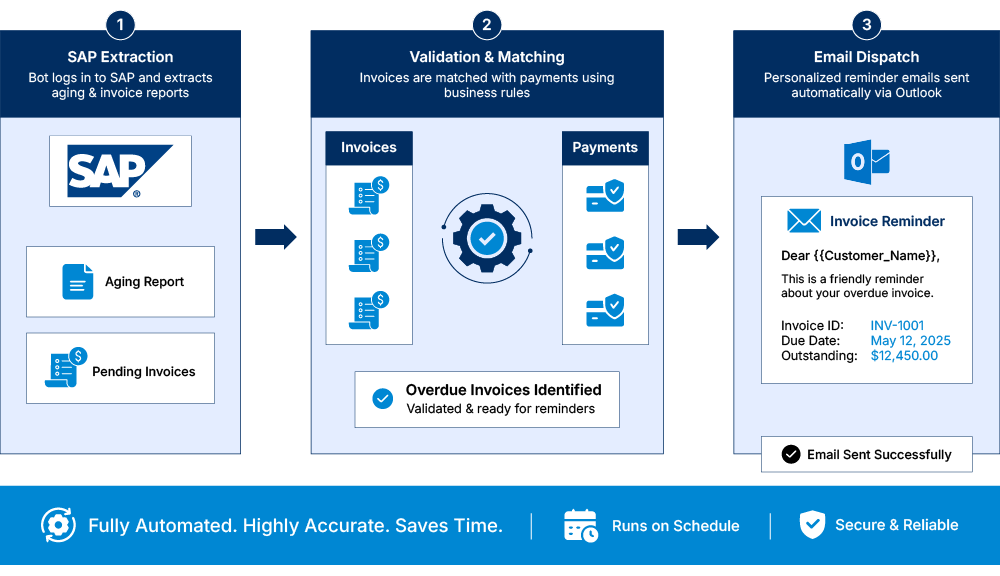
The bot compared exported invoice records with received payment data while applying the classification rules defined during the process review phase. It produced a clean and validated list of overdue accounts. For every overdue customer, the bot created and sent a personalized reminder email through Outlook. Each email included relevant invoice details together with outstanding amounts and due dates. The entire sequence, from SAP login to email delivery, ran in a fraction of the time the team had previously spent on the same task manually.
Real-data UAT, edge case simulation, and scheduled rollout with monitoring
We ran multiple rounds of testing using real customer data before moving toward deployment. Each test cycle validated the bot’s SAP interactions, payment matching logic, and email output against the credit control team’s own manual checks. We specifically simulated challenging scenarios, such as late partial payments, mismatched currencies, and customers with non-standard payment terms, to verify that the bot handled exceptions the same way an experienced team member would.
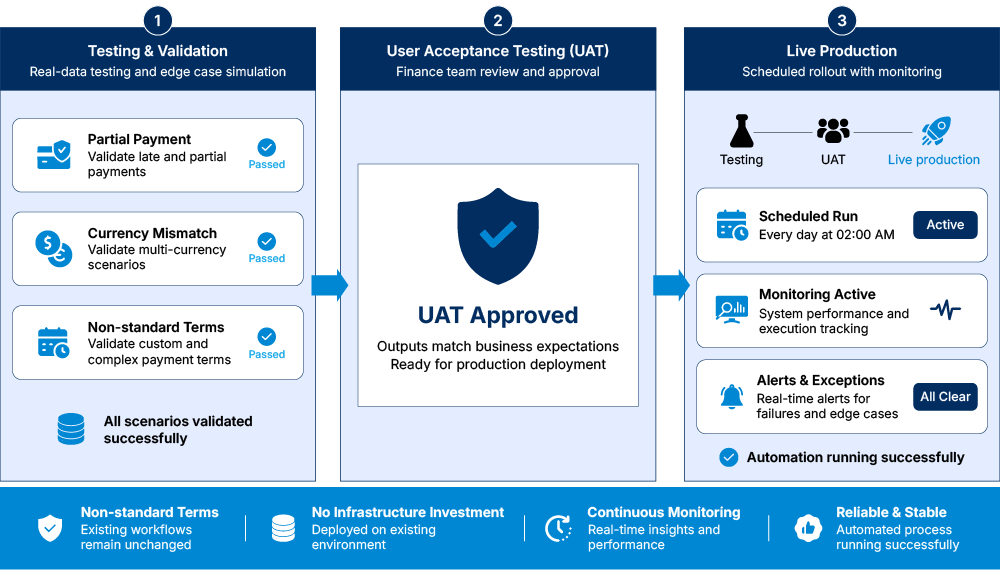
User Acceptance Testing was conducted with the credit control team directly involved in sign-off. Their feedback shaped the final refinements to classification logic and email templates. Once the team confirmed the outputs matched their expectations, we deployed the bot on a scheduled run cadence. Post-launch, we monitored the first several cycles alongside the team and made minor adjustments based on live edge cases. The rollout required no process disruption and no new infrastructure investment from the client.
Business goals and measurable outcomes
| Business objective | Business benefit delivered |
|---|---|
| Cut the invoice cycle processing time | The bot reduced a two-to-three-day manual process to a few hours. The credit control team reclaimed full working days each billing cycle. |
| Eliminate data mismatches and validation errors | Automated cross-referencing of SAP reports against payment records removed the manual comparison step and the errors that came with it. |
| Ensure timely and consistent customer follow-ups | Personalized reminder emails now go out on schedule every cycle, regardless of team capacity or workload peaks during busy periods. |
| Improve cash flow through faster collections | Timely, accurate reminders led to faster customer payments and contributed to a reduction of outstanding balances by approximately 15% within the first quarter post-launch. |
| Scale without adding headcount | As customer volumes grew, the bot handled the increased workload with no changes to team size or manual effort from the credit control team. |
Tech stack
- Automation platform
- Microsoft Power Automate Desktop
- ERP system
- SAP ERP (aging report export, invoice and payment modules)
- Data processing
- Microsoft Excel (structured data manipulation and matching)
- Email delivery
- Microsoft Outlook (personalized automated email dispatch)
- Credential management
- Secure vault-based credential handling within Power Automate Desktop
- Scheduling
- Power Automate Desktop scheduled run cadence
- Exception handling
- In-flow error detection with automated team alert notifications
- Testing methodology
- User Acceptance Testing with real customer data and edge case simulation
Similar case studies
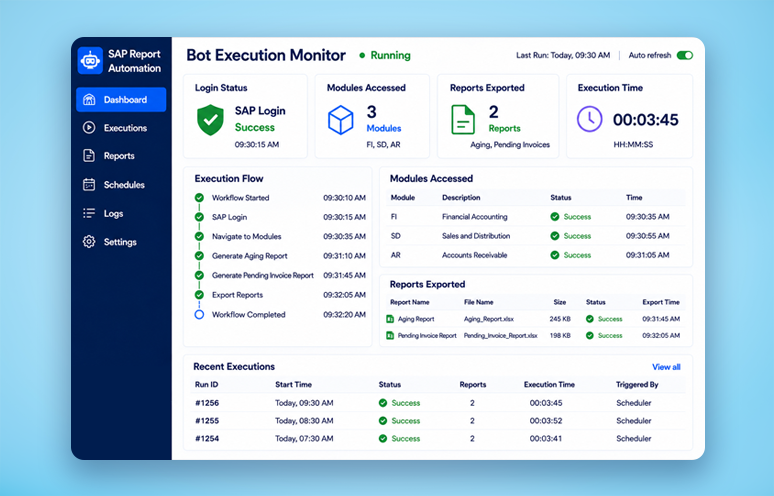
Automating SAP Invoice Management with Power Automate Desktop
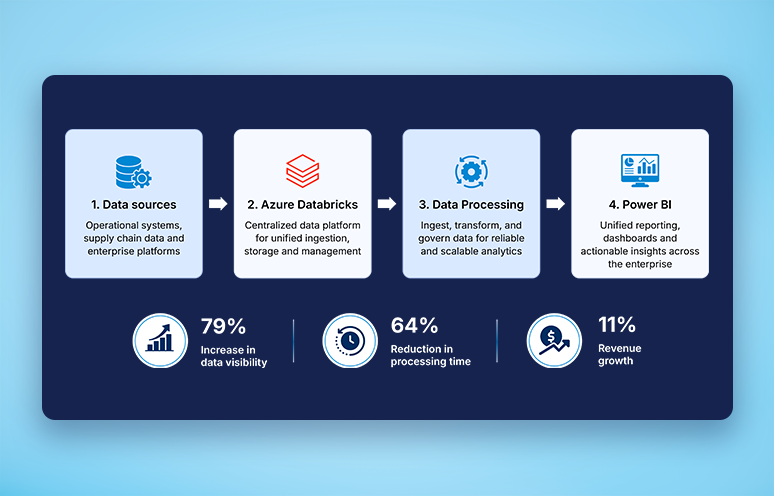
Streamlined data integration with Databricks
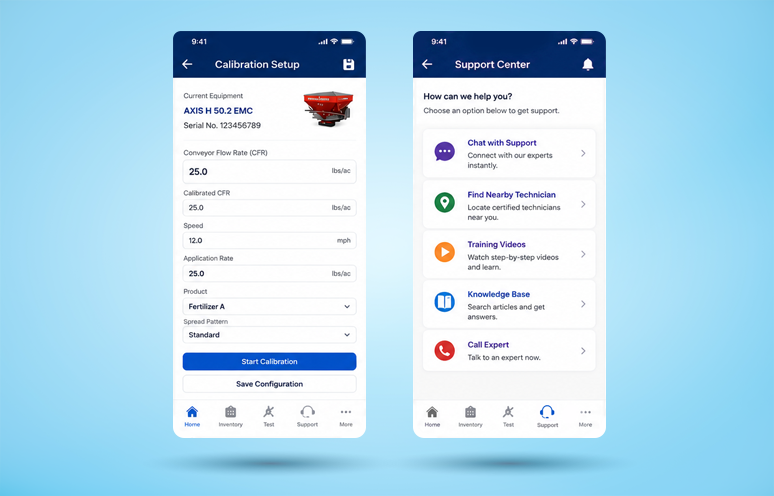
Transforming equipment calibration: A mobile app solution for enhanced efficiency
Connect Now
Our experts would be eager to hear you.

